
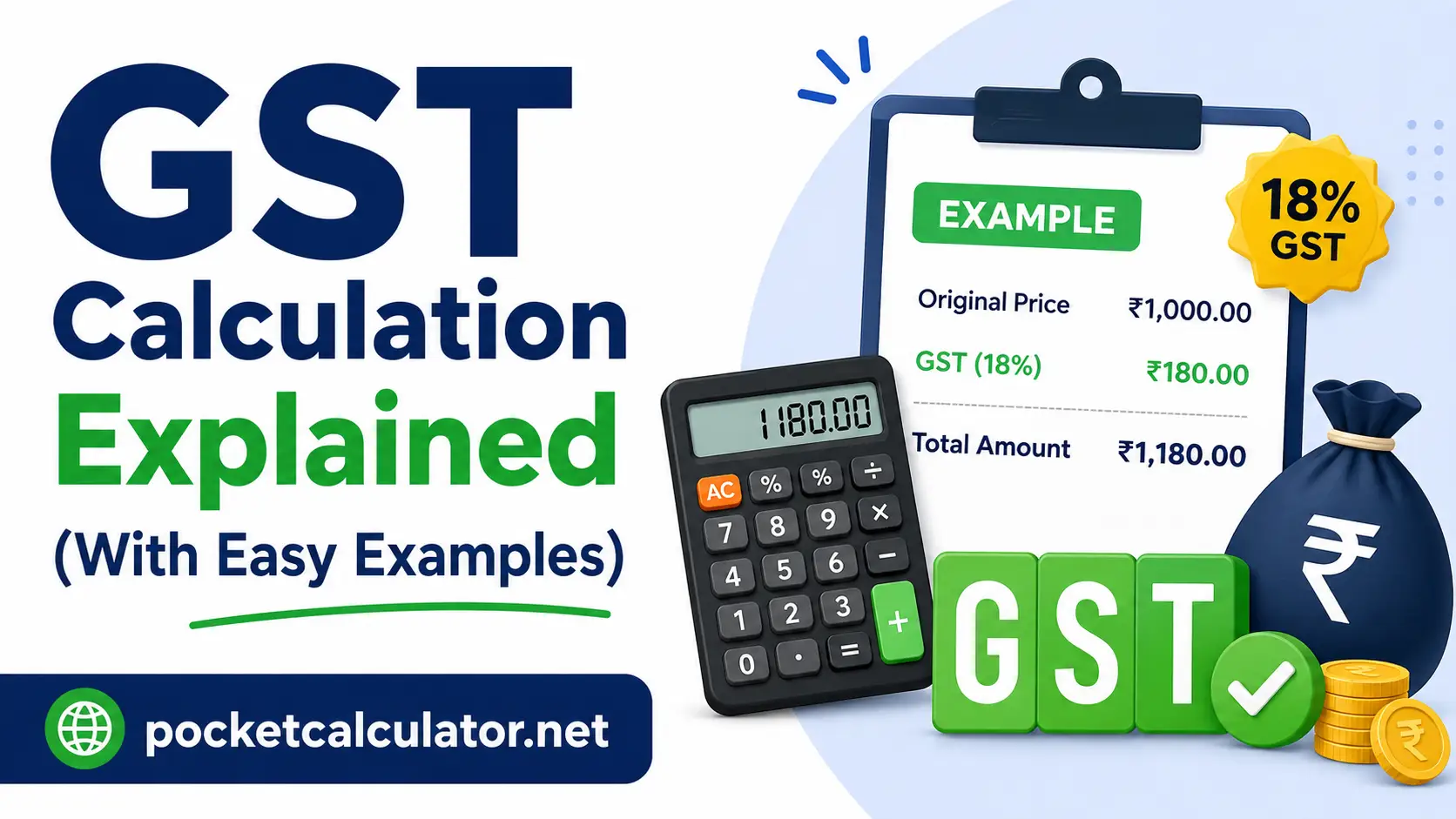
🧾 GST Calculation Explained (With Easy Examples)
If you’ve ever looked at a bill in India, you’ve definitely seen something like:
👉 “GST @ 18% added”
👉 “CGST + SGST included”
And maybe you’ve wondered:
- 🤔 How exactly is GST calculated?
- 🤔 Why are there two taxes (CGST & SGST)?
- 🤔 Am I paying the right amount?
You’re not alone. GST can look confusing at first—but once you understand the basics, it becomes surprisingly simple.
In this guide, we’ll break down GST calculation step by step, using easy examples, real-life situations, and practical tips.
💡 What is GST (In Simple Words)?
GST (Goods and Services Tax) is a single indirect tax applied to most goods and services in India.
👉 It replaced multiple older taxes like VAT, service tax, excise duty, etc.
🧠 The idea behind GST:
Instead of many taxes, there is now one system.
📊 Types of GST You Should Know
Before calculating GST, you need to understand its types:
1️⃣ CGST (Central GST)
Collected by the central government
2️⃣ SGST (State GST)
Collected by the state government
3️⃣ IGST (Integrated GST)
Applied on interstate transactions
🧾 Simple Rule:
| Situation | Tax Applied |
|---|---|
| Within same state | CGST + SGST |
| Between states | IGST |
🧮 Basic GST Calculation Formula
GST calculation is actually very straightforward.
📌 Formula:
👉 GST Amount = (Original Price × GST Rate) ÷ 100
👉 Final Price = Original Price + GST
😄 Let’s Start With a Simple Example
You buy a product worth ₹1,000 and GST rate is 18%.
Step 1: Calculate GST
GST = (1000 × 18) ÷ 100 = ₹180
Step 2: Add to price
Final Price = ₹1,000 + ₹180 = ₹1,180
🧾 GST Breakdown
Since it’s within the same state:
- CGST (9%) = ₹90
- SGST (9%) = ₹90
Also Read : Car Loan EMI Calculation 2026: Simple Method Anyone Can Use
📊 GST Rate Slabs in India
Different products have different GST rates.
| GST Rate | Category |
|---|---|
| 0% | Essential items (basic food grains) |
| 5% | Daily-use items |
| 12% | Standard goods |
| 18% | Most services & products |
| 28% | Luxury items |
👉 Most things you buy (electronics, services, etc.) fall under 18% GST.
🧠 Inclusive vs Exclusive GST (Important!)
This is where many people get confused.
1️⃣ Exclusive GST
👉 GST is added on top of price
Example:
- Price = ₹1,000
- GST = ₹180
- Final = ₹1,180
2️⃣ Inclusive GST
👉 GST is already included in price
Example:
- Final price = ₹1,180
- You need to extract GST
🧮 Formula for Inclusive GST
👉 GST = (Final Price × Rate) ÷ (100 + Rate)
📌 Example:
Final price = ₹1,180 (inclusive of 18%)
GST = (1180 × 18) ÷ 118 = ₹180
Original price = ₹1,000
🧡 Real-Life Example (Relatable)
Let’s say you go to a restaurant with friends.
- Food bill = ₹2,000
- GST rate = 5%
Calculation:
GST = ₹100
Final bill = ₹2,100
Now split between 3 friends:
👉 ₹700 each
Sounds simple—but now you understand how that ₹100 came in.
📊 GST Calculation Table (Quick Reference)
| Price | GST Rate | GST Amount | Final Price |
|---|---|---|---|
| ₹500 | 5% | ₹25 | ₹525 |
| ₹1,000 | 12% | ₹120 | ₹1,120 |
| ₹2,000 | 18% | ₹360 | ₹2,360 |
| ₹5,000 | 28% | ₹1,400 | ₹6,400 |
🔍 Why GST Matters in Daily Life
Understanding GST helps you:
- ✔️ Verify bills
- ✔️ Avoid overcharging
- ✔️ Manage business pricing
- ✔️ Make smarter purchases
⚠️ Common Mistakes People Make
❌ Confusing Inclusive & Exclusive Price
Always check if GST is already included.
❌ Ignoring GST Rate
Different items have different rates.
❌ Not Checking Bill Details
Sometimes incorrect GST is charged.
🧭 Tips to Calculate GST Easily
- ✔️ Remember basic formula
- ✔️ Use calculator for accuracy
- ✔️ Know common GST rates (5%, 12%, 18%)
- ✔️ Double-check invoices
📱 Should You Use GST Calculators?
Yes 👍
They are:
- Fast
- Accurate
- Beginner-friendly
But knowing manual calculation helps you:
👉 Stay confident and aware
🧾 GST for Small Businesses (Quick Insight)
If you run a business:
- You collect GST from customers
- You pay GST to government
- You can claim Input Tax Credit (ITC)
👉 Meaning: you don’t pay tax twice
🧡 Another Real-Life Situation
Neha runs a small online store.
She sells a product for ₹1,000 + 18% GST.
Customer pays ₹1,180.
But Neha already paid ₹100 GST while buying materials.
👉 She only pays ₹80 to government (₹180 – ₹100)
That’s how GST avoids double taxation.
Frequently Asked Questions (FAQs) ❓
How do I calculate GST quickly?
Use formula:
👉 GST = (Price × Rate) ÷ 100
What is 18% GST on ₹500?
GST = ₹90
Final price = ₹590
What is the difference between CGST and SGST?
CGST → Central government
SGST → State government
How do I calculate GST from inclusive price?
👉 GST = (Final Price × Rate) ÷ (100 + Rate)
Is GST the same for all products?
No ❌
Different items have different GST rates.
Can GST be avoided?
No. It is mandatory for applicable goods/services.
🎯 Final Thoughts
GST might seem technical at first—but once you break it down, it’s actually quite logical.
The key takeaway is simple:
👉 GST is just a percentage added (or included) in price
When you understand:
- How to calculate it
- How to identify it
- How it applies
You become a smarter consumer and a more confident decision-maker.
One Simple Line to Remember
“If you know the price and the rate, you already know GST.”