
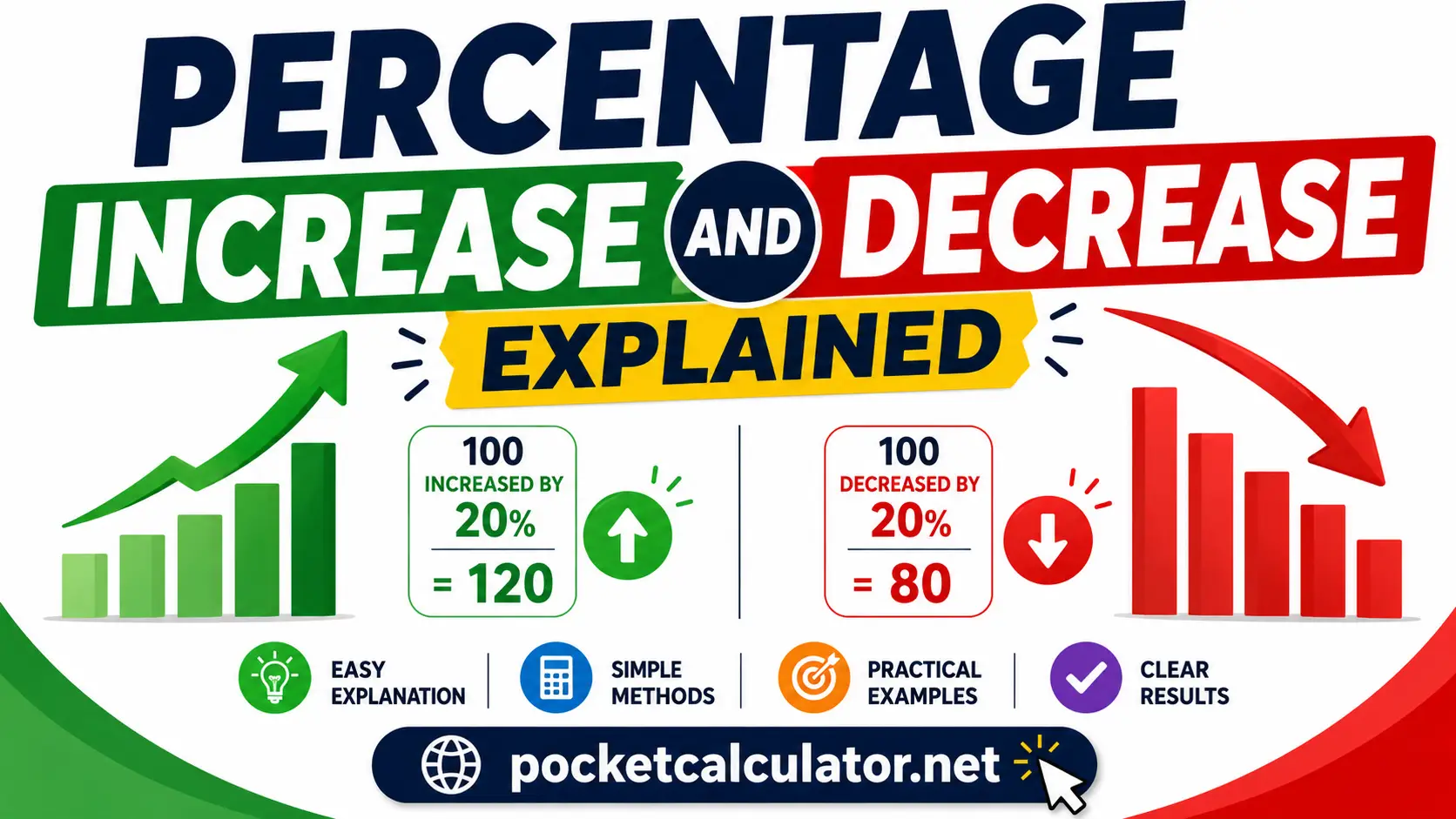
📈 Percentage Increase and Decrease Explained (With Easy Examples & Tricks)
Percentages are one of those topics that seem simple at first… until you actually start solving questions.
You’ll see them everywhere:
- 🛒 Discounts in shopping
- 💼 Salary hikes and cuts
- 📊 Profit and loss
- 🎓 Exam results
Yet many people still feel confused when asked:
👉 “What is the percentage increase?”
👉 “Why doesn’t a 20% increase cancel a 20% decrease?”
The problem isn’t difficulty—it’s clarity.
In this guide, we’ll break everything down in a way that actually makes sense, using real-life examples, shortcuts, and practical thinking.
💡 What is Percentage? (Quick Understanding)
Percentage simply means:
👉 “Out of 100”
So:
- 50% = half
- 25% = one-fourth
- 10% = one-tenth
👉 This simple idea is the foundation of everything that follows.
📈 What is Percentage Increase?
Percentage increase tells you:
👉 How much a value has grown compared to its original value
🧮 Formula for Percentage Increase
[
\text{Percentage Increase} = \frac{\text{Increase}}{\text{Original Value}} \times 100
]
🧠 Example (Step-by-Step)
Let’s say:
- Original price = ₹1,000
- New price = ₹1,300
Increase = ₹300
👉 Percentage increase = (300 ÷ 1000) × 100 = 30%
⚡ Shortcut Method
Instead of using the formula every time:
👉 Use this:
New Value = Original × (1 + Rate)
Example:
₹1,000 increased by 30%
👉 1000 × 1.3 = ₹1,300
✔️ Faster
✔️ Less calculation
📉 What is Percentage Decrease?
Percentage decrease tells you:
👉 How much a value has reduced compared to its original value
🧮 Formula for Percentage Decrease
[
\text{Percentage Decrease} = \frac{\text{Decrease}}{\text{Original Value}} \times 100
]
🧠 Example
- Original price = ₹1,000
- New price = ₹700
Decrease = ₹300
👉 Percentage decrease = (300 ÷ 1000) × 100 = 30%
⚡ Shortcut Method
👉 New Value = Original × (1 – Rate)
Example:
₹1,000 decreased by 30%
👉 1000 × 0.7 = ₹700
⚖️ Percentage Increase vs Decrease (Clear Difference)
| Feature | Increase 📈 | Decrease 📉 |
|---|---|---|
| Meaning | Value goes up | Value goes down |
| Operation | Add | Subtract |
| Shortcut | × (1 + rate) | × (1 – rate) |
Also Read : Percentage Tricks for Exams 2026 (Fast Calculation Tips)
🔥 Important Concept: Increase and Decrease Are Not Equal
This is where most people make mistakes.
🧮 Example
Step 1:
₹1,000 increased by 20%
👉 ₹1,000 × 1.2 = ₹1,200
Step 2:
Now decrease ₹1,200 by 20%
👉 ₹1,200 × 0.8 = ₹960
🎯 Final Result:
👉 ₹960 ≠ ₹1,000
💡 Why This Happens?
Because:
- Increase is calculated on ₹1,000
- Decrease is calculated on ₹1,200
👉 Different base = different result
🧡 Real-Life Example (Relatable Story)
Let’s say Rahul is buying a laptop.
- Original price = ₹50,000
During festive season:
- Price increases by 10% → ₹55,000
Later:
- A discount of 10% is applied
👉 ₹55,000 × 0.9 = ₹49,500
Rahul expected the price to return to ₹50,000—but it didn’t.
👉 He actually paid ₹500 less.
Lesson:
Percentage changes always depend on the current value, not the original one.
📊 Quick Comparison Table
| Original Price | Change | New Price |
|---|---|---|
| ₹1,000 | +10% | ₹1,100 |
| ₹1,000 | -10% | ₹900 |
| ₹1,000 → ₹1,200 → -20% | ₹960 | |
| ₹50,000 → +10% → -10% | ₹49,500 |
🔁 Successive Percentage Change (Shortcut Trick)
When two percentage changes happen one after another:
👉 Use this formula:
Net Change = a + b + (ab ÷ 100)
🧮 Example 1: Increase + Increase
Increase by 20% and then 10%
👉 20 + 10 + (20×10)/100
👉 20 + 10 + 2 = 32% increase
🧮 Example 2: Increase + Decrease
Increase 20%, then decrease 10%
👉 20 – 10 – (20×10)/100
👉 20 – 10 – 2 = 8% increase
🧠 Everyday Uses of Percentage Change
You use this concept more than you realize:
- 🛒 Discounts while shopping
- 💼 Salary increment
- 📉 Price drops in sales
- 📊 Stock market changes
- 🎓 Exam results
⚠️ Common Mistakes to Avoid
❌ Assuming increase and decrease cancel each other
They don’t—because the base changes.
❌ Using wrong original value
Always compare with the starting value.
❌ Ignoring shortcut methods
They save time, especially in exams.
❌ Not checking final result
Always verify if the answer makes sense.
🧭 Smart Tips for Exams
- ✔️ Use multiplication shortcuts
- ✔️ Avoid long division
- ✔️ Memorize common percentages
- ✔️ Practice daily
📱 Mental Math Shortcut Summary
| Situation | Shortcut |
|---|---|
| Increase | × (1 + rate) |
| Decrease | × (1 – rate) |
| Two changes | a + b + (ab/100) |
🧡 Another Real-Life Situation
Imagine you’re shopping during a sale:
- Jacket price = ₹2,000
- 25% discount
👉 25% = 1/4
👉 Discount = ₹500
👉 Final price = ₹1,500
Now:
- Additional 10% discount
👉 ₹1,500 × 0.9 = ₹1,350
👉 Total saving = ₹650
Understanding percentages helps you make smarter buying decisions.
Frequently Asked Questions (FAQs) ❓
What is percentage increase?
👉 Increase in value expressed as a percentage of original value.
What is percentage decrease?
👉 Reduction in value expressed as a percentage.
Why don’t equal increase and decrease cancel?
Because they are calculated on different values.
What is the fastest way to calculate?
👉 Use multiplication:
Increase → × (1 + rate)
Decrease → × (1 – rate)
What is successive percentage formula?
👉 a + b + (ab/100)
Where is it used in real life?
Shopping, salary, business, exams.
🎯 Final Thoughts
Percentage increase and decrease is not about memorizing formulas—it’s about understanding how values change.
The key idea is:
👉 Everything depends on the base value
Once you understand that:
- Calculations become easier
- Mistakes reduce
- Confidence improves
One Simple Line to Remember
“Percentages don’t cancel—they compound.”